
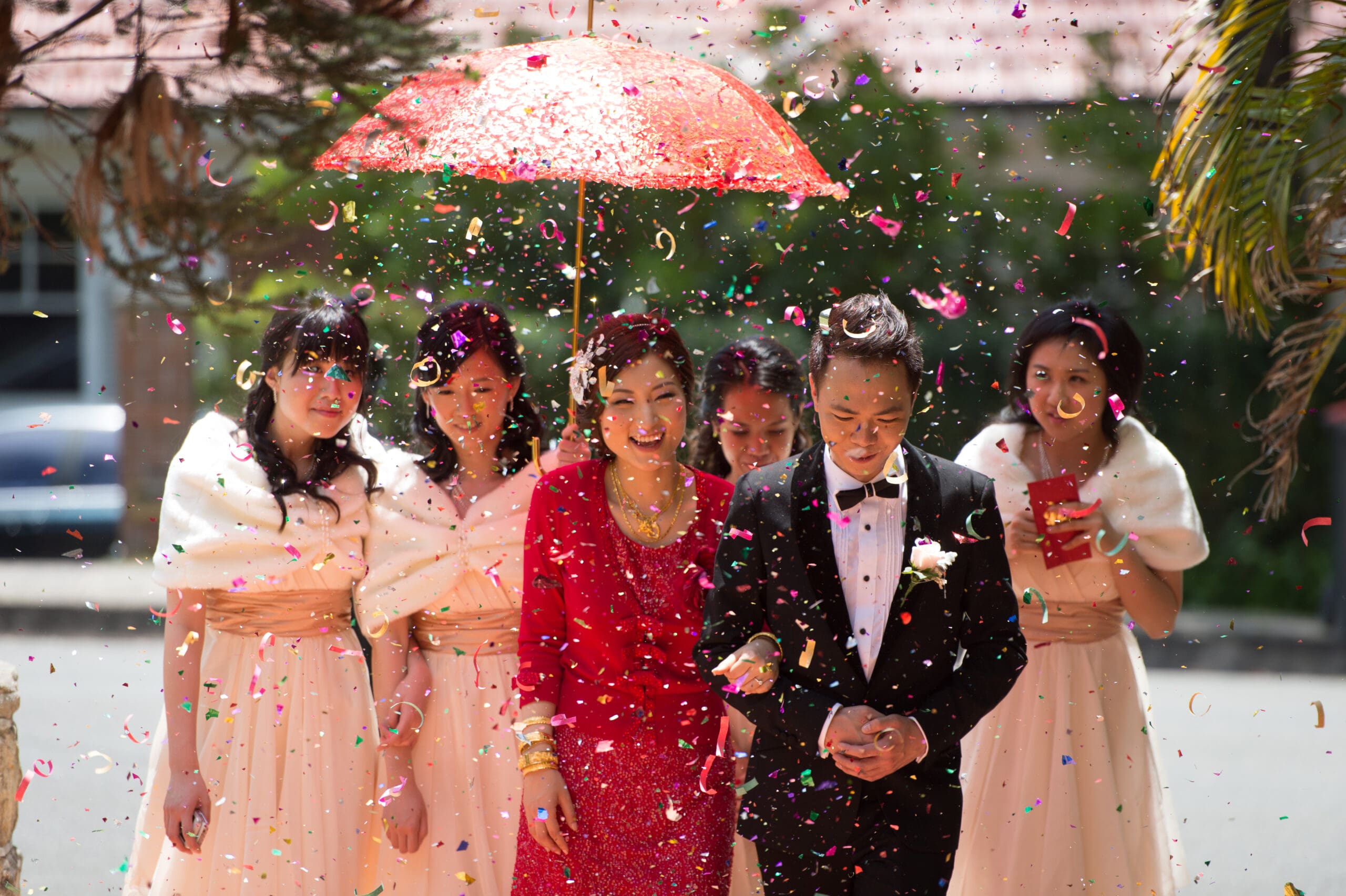
Honouring Tradition: Tea Ceremony at Modern Australian Weddings
For many Asian couples, incorporating wedding traditions adds a meaningful and joyful layer to their special day.
Two of the most cherished customs are door games (闯门)and the Tea Ceremony (敬茶)—both rich in cultural significance and symbolism. These traditions not only celebrate the couple’s union but also honour family, respect, and love in a fun and heartfelt way.
Door game stake place on the wedding morning when the groom and his groomsmen arrive at the bride’s home to “win” her from her bridesmaids. The bridesmaids set up a series of playful challenges—ranging from answering questions about the bride to performing humorous tasks—to test the groom’s devotion. Often, the groom must also offer a red packet (红包)filled with money as a gesture of sincerity before he is allowed to see his bride. This light-hearted tradition represents the groom’s commitment to overcoming any obstacles for his love.
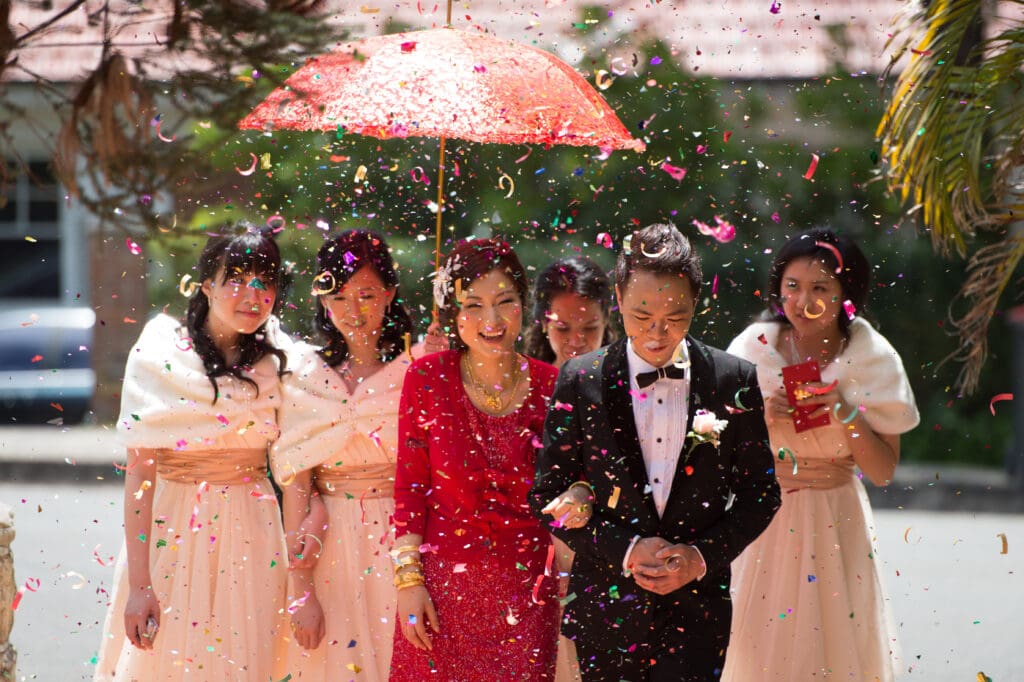
The Chinese tea ceremony is a deeply respected wedding ritual where the newlyweds serve tea to their elders, symbolizing gratitude and respect. The couple kneels while presenting tea, typically brewed with lotus seeds and red dates, which represent fertility and a sweet marriage. In return, parents and elders bless the couple with words of wisdom and give them red packets or jewellery as a token of goodwill. This intimate ceremony serves as a beautiful bridge between tradition and modernity, ensuring that the couple enters their new life with their family’s love and blessings.
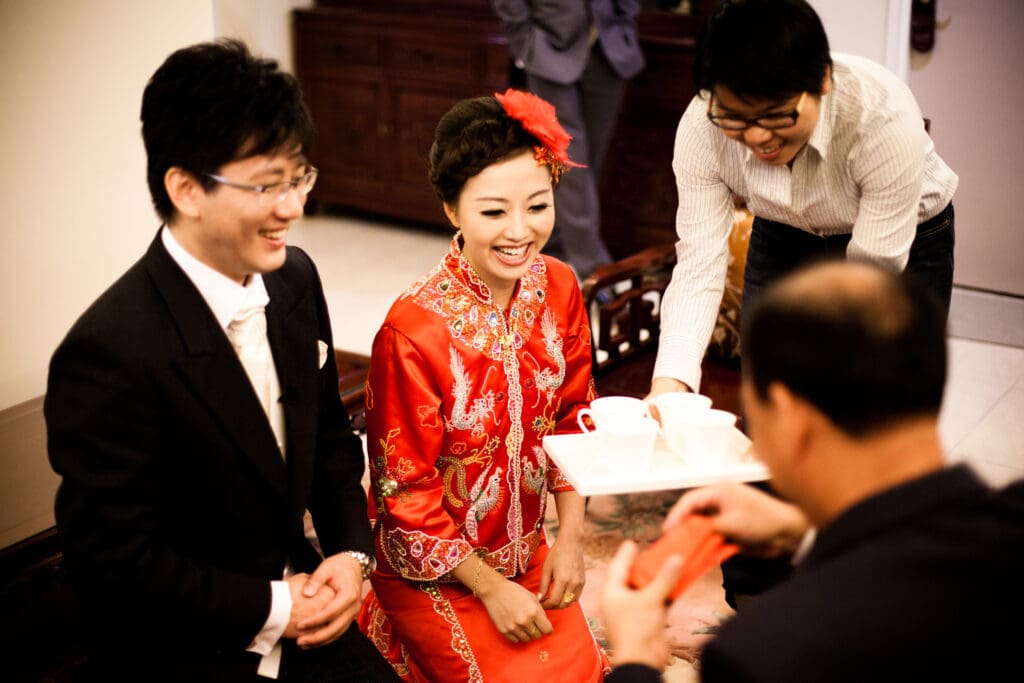
The Vietnamese tea ceremony (LễVu Quy or LễThành Hôn)is a significant pre-wedding tradition where the groom’s family formally asks for the bride’s hand in marriage. The ceremony begins with the groom’s family arriving at the bride’s home, bringing red-lacquered boxes filled with symbolic gifts such as tea, betel leaves, and fruits. The bride, dressed in a traditional áo dài, is introduced to the groom’s family, and the couple serves tea to their elders as a sign of respect and gratitude. The ceremony is deeply rooted in Vietnamese culture, emphasizing family unity and the blessing of ancestors in the couple’s new journey together.
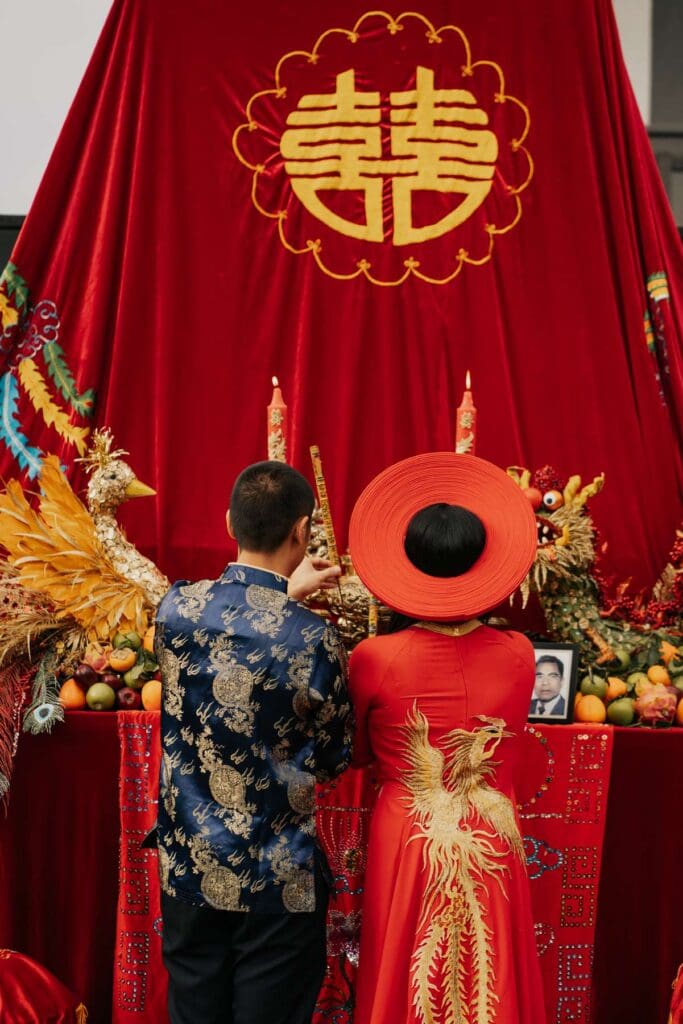
In Korean weddings, the Paebaek (폐백) ceremony is a cherished post-wedding tradition where the bride formally meets the groom’s family. Dressed in traditional hanbok, the couple kneels before their elders and serves them tea or rice wine. In return, the elders offer words of wisdom and toss chestnuts and datesinto the bride’s hanbok skirt—each chestnut and date representing future sons and daughters. This ritual symbolizes familial acceptance, prosperity, and fertility. The Paebaek ceremony is often incorporated into modern weddings, even for Korean couples living abroad, as a meaningful way to honour their heritage.
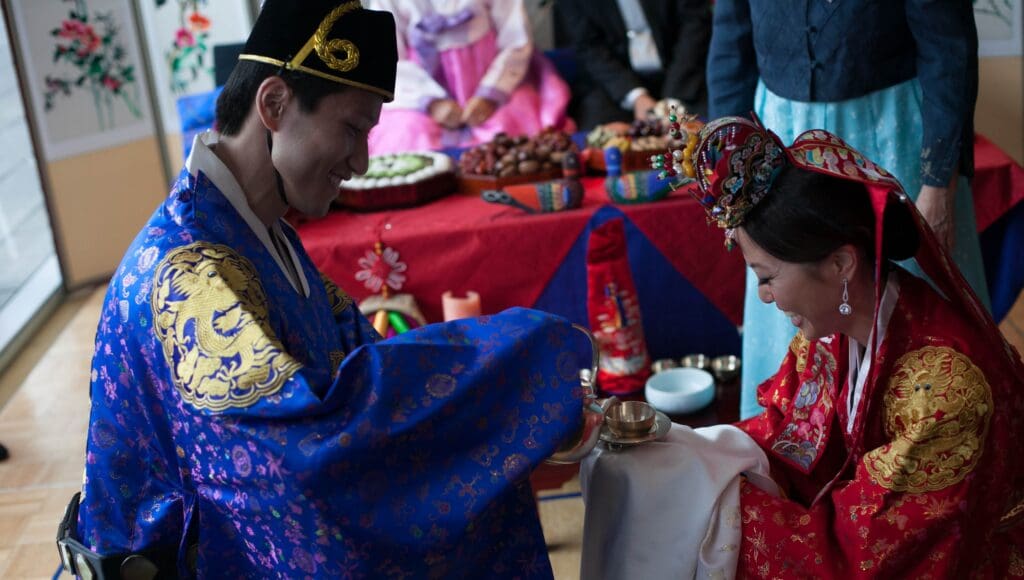
We have had the honour of helping many couples plan their tea ceremonies while celebrating their wedding in Sydney. Whether they were based in China, Malaysia, Vietnam or Korea, we worked closely with them to ensure their traditions were beautifully incorporated, making their wedding day deeply personal and meaningful. By sourcing authentic tea sets, guiding them through the ceremony process, and coordinating with family members, we help create a seamless and heartfelt experience that connects couples to their heritage, even from afar.
Would you like us to incorporate specific cultural elements into your wedding planning? Let’s create a celebration that reflects your traditions in a meaningful and elegant way. Browse our packages here.


PLEASE COMMENT BELOW